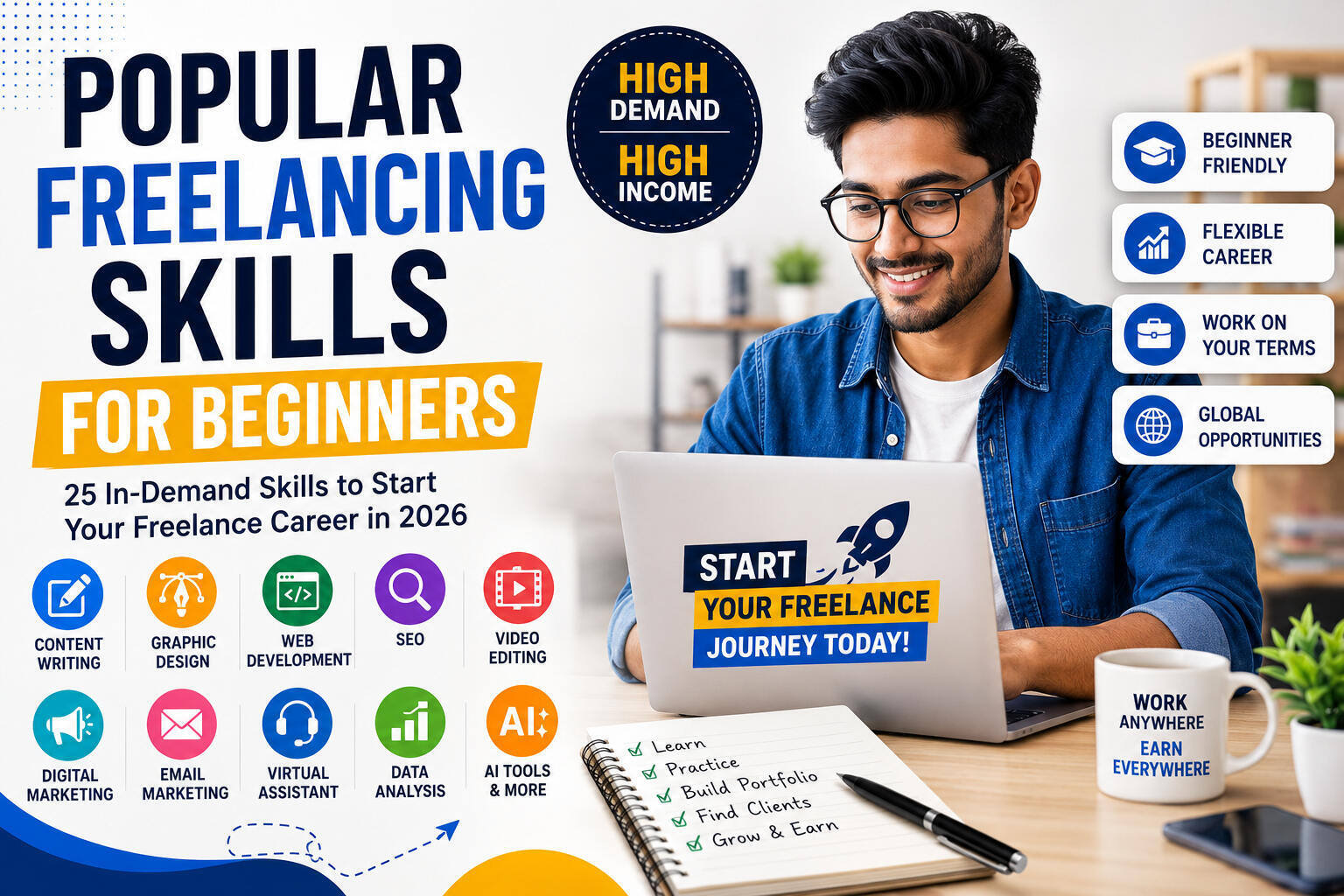
Popular Freelancing Skills for Beginners
Freelancing has become one of the most popular ways to earn income online. Advances in digital technology, remote work, and global freelance marketplaces have created opportunities for people with a wide range of skills to work with clients from around the world.
Whether you’re a student, a recent graduate, a full-time employee looking for additional income, or someone planning a career change, learning an in-demand freelancing skill can open the door to flexible work and long-term career growth.
The good news is that you don’t need to master dozens of skills to get started. Choosing one valuable skill, practicing consistently, and building a strong portfolio can be enough to begin your freelance journey.
In this guide, you’ll discover the most popular freelancing skills for beginners, how to choose the right one for your goals, and practical advice for starting a successful freelance career.
What Is Freelancing?
Freelancing is a way of working where individuals provide services to clients on a project, contract, or hourly basis instead of being employed full-time by a single company.
Freelancers often work remotely and may serve multiple clients across different industries.
Common freelance services include:
- Content writing
- Graphic design
- Web development
- Video editing
- Virtual assistance
- Digital marketing
- Translation
- Data entry
- Programming
- SEO consulting
Freelancing offers flexibility, but it also requires self-discipline, continuous learning, and effective communication.
Why Learn a Freelancing Skill?
Developing a freelance skill can provide benefits beyond earning income.
Flexible Working Hours
Many freelancers choose their own schedules, allowing them to balance work with studies, family responsibilities, or other commitments.
Global Opportunities
Freelancers can work with businesses, startups, nonprofits, and entrepreneurs from different countries, expanding their professional experience.
Continuous Skill Development
Freelancing encourages ongoing learning as industries, tools, and client expectations evolve.
Diverse Projects
Working with different clients can help you build experience across industries and strengthen your portfolio.
Potential for Career Growth
As your expertise and reputation grow, you may qualify for higher-value projects, long-term client relationships, or specialized consulting work.
How to Choose the Right Freelancing Skill
Not every skill is suitable for every person. Choosing the right one depends on your interests, strengths, and long-term goals.
Consider these questions:
- What topics genuinely interest you?
- Do you enjoy creative, technical, or analytical work?
- Are you willing to learn continuously?
- Does the skill have market demand?
- Can you build a portfolio within a reasonable time?
Selecting a skill you enjoy learning often makes it easier to stay motivated.
Characteristics of a Good Freelancing Skill
A strong freelance skill generally has the following qualities:
- Consistent market demand
- Opportunities for beginners
- Room for specialization
- Ability to work remotely
- Portfolio-based hiring
- Potential for long-term career growth
Top 10 Popular Freelancing Skills for Beginners
1. Content Writing
Content writing remains one of the most accessible freelance skills for beginners.
Writers create:
- Blog posts
- Website content
- Product descriptions
- Email newsletters
- Technical articles
- Guides and tutorials
Skills Needed
- Grammar
- Research
- SEO basics
- Clear communication
- Editing
Content writers who consistently produce high-quality work can expand into specialized niches such as technology, finance, health, or software.
2. Graphic Design
Businesses frequently need visual content for marketing and branding.
Common design projects include:
- Logos
- Social media graphics
- Posters
- Flyers
- Presentations
- Infographics
- Website banners
Skills Needed
- Typography
- Color theory
- Layout
- Design software
- Creativity
3. WordPress Website Development
Millions of websites use WordPress, creating ongoing demand for freelancers who can build and maintain websites.
Services include:
- Website setup
- Theme customization
- Plugin configuration
- Speed optimization
- Security improvements
- Basic troubleshooting
This skill combines creativity with technical problem-solving.
4. Search Engine Optimization (SEO)
SEO professionals help websites improve their visibility in search engines.
Typical services include:
- Keyword research
- On-page SEO
- Technical SEO audits
- Content optimization
- Internal linking
- SEO reporting
SEO is particularly valuable because it supports long-term organic growth.
5. Social Media Management
Many businesses need help planning and managing their social media presence.
Responsibilities may include:
- Content scheduling
- Community engagement
- Basic analytics
- Caption writing
- Content planning
- Platform management
Strong communication and organization are important in this role.
6. Video Editing
Short-form video content continues to grow across many platforms.
Freelance video editors work on:
- YouTube videos
- Educational content
- Product demonstrations
- Promotional videos
- Social media clips
Attention to detail and storytelling are key skills.
7. Virtual Assistance
Virtual assistants provide administrative and operational support to businesses and entrepreneurs.
Tasks often include:
- Email management
- Calendar scheduling
- Data entry
- Internet research
- Customer support
- Document organization
This role is suitable for organized individuals with good communication skills.
8. Data Entry
Although competition can be high, data entry remains a beginner-friendly way to gain freelance experience.
Typical work includes:
- Spreadsheet management
- Data formatting
- Data collection
- CRM updates
- Database maintenance
Accuracy and attention to detail are essential.
9. Translation
If you are fluent in more than one language, translation services can provide valuable freelance opportunities.
Projects may involve:
- Articles
- Business documents
- Website localization
- Product descriptions
- Educational materials
Professional translators prioritize both accuracy and cultural context.
10. AI Content Assistance
As AI tools become more common, businesses increasingly seek freelancers who can use them responsibly to improve productivity.
Services may include:
- Drafting content
- Editing AI-generated text
- Prompt writing
- Content refinement
- Workflow optimization
Success in this area still depends on strong writing, critical thinking, and careful fact-checking.
Essential Soft Skills Every Freelancer Needs
Technical expertise is only part of freelance success.
Develop these professional skills as well:
- Communication
- Time management
- Problem-solving
- Reliability
- Organization
- Adaptability
- Client relationship management
- Professionalism
- Attention to detail
- Continuous learning
Clients often return to freelancers who are dependable and easy to work with.
Tips for Beginners
If you’re just starting:
- Focus on learning one skill well.
- Practice consistently.
- Create sample projects for your portfolio.
- Learn from feedback.
- Avoid comparing your progress to others.
- Continue improving your knowledge over time.
A steady, consistent approach is often more effective than trying to learn many unrelated skills at once.
These insights will help you move from learning a skill to finding real freelance opportunities with confidence.
15 More In-Demand Freelancing Skills
In addition to the first ten skills covered in Part 1, many other services are in high demand across freelance marketplaces. Learning one of these skills can help you expand your opportunities or specialize in a growing niche.
11. Web Development
Web developers build and maintain websites and web applications.
Common Services
- Business websites
- Landing pages
- Custom web applications
- Website maintenance
- Bug fixing
- Performance optimization
Skills to Learn
- HTML
- CSS
- JavaScript
- PHP
- React
- Node.js
12. UI/UX Design
UI (User Interface) and UX (User Experience) designers create websites and applications that are both visually appealing and easy to use.
Typical Projects
- Mobile apps
- SaaS dashboards
- Landing pages
- Website redesigns
- Wireframes
- Interactive prototypes
13. Digital Marketing
Businesses rely on digital marketers to increase brand awareness and generate leads.
Services include:
- Search Engine Optimization (SEO)
- Social Media Marketing
- Email Marketing
- PPC Advertising
- Marketing Strategy
- Analytics
14. Copywriting
Copywriters create persuasive content designed to encourage readers to take action.
Examples include:
- Sales pages
- Landing pages
- Product descriptions
- Email campaigns
- Advertisements
Strong copywriting combines psychology, creativity, and clear communication.
15. Email Marketing
Email marketing remains one of the highest-return digital marketing channels.
Freelancers may help clients with:
- Newsletter creation
- Email automation
- Campaign management
- Audience segmentation
- Performance analysis
16. Search Engine Marketing (SEM)
SEM specialists manage paid advertising campaigns on search engines.
Responsibilities include:
- Keyword selection
- Campaign setup
- Bid management
- Ad copy optimization
- Conversion tracking
17. Mobile App Development
As businesses increasingly invest in mobile experiences, demand for app developers continues to grow.
Popular technologies include:
- Flutter
- React Native
- Swift
- Kotlin
18. Cybersecurity Consulting
Organizations need professionals who can improve digital security.
Services may include:
- Security assessments
- Website security
- Risk analysis
- Security recommendations
- Compliance support
19. Data Analysis
Data analysts help businesses make informed decisions.
Common tasks:
- Dashboard creation
- Spreadsheet analysis
- SQL reporting
- Business intelligence
- Data visualization
20. AI Prompt Engineering
As AI tools become more common, businesses increasingly seek professionals who can design effective prompts and optimize AI-assisted workflows.
Projects may involve:
- Prompt libraries
- AI workflow design
- Business automation
- Content generation strategies
21. Online Tutoring
Experienced professionals and educators can teach:
- Languages
- Mathematics
- Programming
- Science
- Business
- Software skills
22. Voice-Over Services
Businesses, educators, and creators often need professional voice recordings for:
- YouTube videos
- Audiobooks
- Advertisements
- E-learning courses
- Podcasts
23. Podcast Editing
Podcast production continues to grow.
Freelancers help with:
- Audio editing
- Noise reduction
- Intro/outro creation
- Publishing support
- Show notes
24. Bookkeeping
Small businesses often outsource bookkeeping tasks.
Responsibilities include:
- Expense tracking
- Invoice management
- Financial records
- Basic reporting
Attention to detail and familiarity with accounting software are valuable in this field.
25. Customer Support
Many companies hire remote freelancers to provide customer service.
Tasks may include:
- Email support
- Live chat
- Ticket management
- Technical assistance
- Customer onboarding
Strong communication and patience are essential.
Where to Learn Freelancing Skills
High-quality learning resources are widely available, both free and paid.
Free Learning Resources
You can begin with:
- Official product documentation
- Educational blogs
- YouTube tutorials
- Community forums
- Open-source projects
- Practice websites
These resources are excellent for building foundational knowledge.
Paid Learning Resources
Structured courses often provide:
- Step-by-step instruction
- Hands-on projects
- Certificates of completion
- Mentor support
- Organized learning paths
Choose reputable instructors with positive reviews and regularly updated content.
Free vs. Paid Learning
| Free Resources | Paid Resources |
|---|---|
| No financial investment | Usually requires payment |
| Great for beginners | Often more structured |
| Learn at your own pace | May include instructor support |
| Community-based learning | Frequently includes guided projects |
Many successful freelancers combine both approaches.
How to Build a Professional Portfolio
A strong portfolio often matters more than a résumé in freelance work.
Include:
- Personal projects
- Practice projects
- Case studies
- Before-and-after examples
- Screenshots
- Client testimonials (with permission)
- Project descriptions explaining your process and results
Quality is more important than quantity.
Tips for Creating Portfolio Projects
If you don’t have paying clients yet, create realistic sample work.
Examples:
Writers
- Blog articles
- Product descriptions
- Email campaigns
Designers
- Logo concepts
- Landing page designs
- Social media graphics
Developers
- Business websites
- Portfolio websites
- Responsive landing pages
SEO Specialists
- Keyword research reports
- Website audits
- Content optimization examples
These projects demonstrate your abilities to potential clients.
How to Get Your First Freelance Client
Finding your first client is often the most challenging step, but persistence and preparation can make a significant difference.
Build an Online Presence
Create a professional profile highlighting:
- Your skills
- Portfolio
- Services
- Experience
- Contact information
Network Professionally
Connect with:
- Entrepreneurs
- Small businesses
- Local organizations
- Former classmates
- Industry communities
Professional networking can lead to referrals and new opportunities.
Start with Smaller Projects
Early projects allow you to:
- Gain practical experience
- Build confidence
- Collect testimonials
- Strengthen your portfolio
Deliver excellent work regardless of project size.
Write Personalized Proposals
When applying for projects:
- Address the client’s requirements.
- Explain how you can help.
- Mention relevant experience.
- Keep your proposal clear and concise.
Avoid sending generic copy-and-paste applications.
Common Beginner Mistakes
Learning from common mistakes can accelerate your progress.
Trying to Learn Too Many Skills
Master one skill before expanding into additional services.
Ignoring Communication
Respond professionally, ask thoughtful questions, and keep clients informed throughout the project.
Underestimating Deadlines
Set realistic timelines and communicate early if delays occur.
Skipping Practice
Watching tutorials alone is not enough.
Build real projects to strengthen your skills.
Giving Up Too Early
Building a freelance career takes time.
Consistent learning, persistence, and professionalism often produce better long-term results than expecting immediate success.
Tips for Long-Term Freelance Success
- Continue learning industry trends.
- Improve both technical and communication skills.
- Maintain a professional reputation.
- Deliver work on time.
- Request constructive feedback.
- Build long-term client relationships.
- Diversify your services as your expertise grows.
- Keep your portfolio updated with your best work.
These final insights will help you build a sustainable freelance career and continue growing your skills in an increasingly competitive global marketplace.
Freelancing Career Roadmap
Starting a freelance career is a journey that requires patience, continuous learning, and consistent effort. The roadmap below provides a practical path for beginners.
Step 1: Choose One Skill
Avoid trying to learn everything at once.
Pick one in-demand skill such as:
- Content Writing
- WordPress Development
- Graphic Design
- SEO
- Video Editing
- Virtual Assistance
Master the fundamentals before expanding into related services.
Step 2: Learn the Basics
Invest time in structured learning.
Focus on:
- Core concepts
- Industry tools
- Best practices
- Real-world projects
Practice consistently instead of only watching tutorials.
Step 3: Build a Portfolio
Clients want evidence of your abilities.
Include:
- Sample projects
- Personal projects
- Case studies
- Before-and-after examples
- Testimonials (when available)
Even if you haven’t worked with paying clients yet, high-quality practice projects can demonstrate your skills.
Step 4: Create Professional Profiles
Maintain complete and professional profiles on freelance marketplaces and professional networking platforms.
Your profile should include:
- Professional photo (where appropriate)
- Clear headline
- Skill summary
- Portfolio
- Relevant certifications
- Contact information (following platform rules)
Step 5: Apply for Suitable Projects
Target projects that match your current experience.
Write personalized proposals that:
- Address the client’s needs
- Explain your approach
- Highlight relevant experience
- Remain concise and professional
Avoid sending identical proposals to every client.
Step 6: Deliver Excellent Work
Long-term success depends on reliability.
Always aim to:
- Meet deadlines
- Communicate clearly
- Deliver quality work
- Handle feedback professionally
Satisfied clients often lead to repeat business and referrals.
Step 7: Continue Learning
Freelancing evolves constantly.
Stay updated with:
- New software
- AI tools
- Industry trends
- Client expectations
- Market demand
Continuous improvement helps you remain competitive.
Building a Sustainable Freelance Business
Freelancing is more than completing individual projects.
Develop habits such as:
- Managing finances
- Tracking income and expenses
- Setting realistic goals
- Creating efficient workflows
- Building long-term client relationships
- Maintaining a healthy work-life balance
Treating freelancing as a professional business can support long-term growth.
Frequently Asked Questions
What is the best freelancing skill for beginners?
There is no single best skill. Choose one that matches your interests, strengths, and market demand. Popular beginner-friendly options include content writing, WordPress, virtual assistance, SEO, graphic design, and video editing.
Can I start freelancing with no experience?
Yes. Many freelancers begin by creating practice projects and building a portfolio before working with their first paying clients.
How long does it take to learn a freelancing skill?
The timeline varies depending on the skill, your learning schedule, and prior experience. Consistent practice is often more important than speed.
Do I need a university degree?
Many freelance clients focus on your portfolio, communication, and ability to deliver quality work rather than formal education.
Which freelancing skill has high demand?
Demand changes over time, but areas such as AI-assisted services, SEO, web development, content writing, graphic design, video editing, and digital marketing continue to be widely sought after.
Can students become freelancers?
Yes. Freelancing can be a flexible option for students, provided they can balance client work with their studies.
Do I need expensive software?
Not always. Many professional-quality free or affordable tools are available, especially for beginners.
How important is English?
English is valuable because many freelance opportunities involve international clients. Improving written and spoken communication can expand your opportunities.
What is a portfolio?
A portfolio is a collection of your best work that demonstrates your skills, experience, and problem-solving ability.
Should I specialize?
Specialization can help you stand out and attract clients looking for expertise in a particular niche.
How do I increase my freelance income?
Improve your skills, build a stronger portfolio, develop long-term client relationships, and gradually move toward higher-value services.
What should I do if clients reject my proposals?
Review your proposals, improve your portfolio, tailor your applications to each project, and continue practicing. Rejection is a common part of freelancing.
Is freelancing a full-time career?
Yes. Many professionals build successful full-time careers through freelancing, while others use it as a part-time income source.
Can AI replace freelancers?
AI is changing how many tasks are performed, but it also creates new opportunities. Freelancers who combine technical skills with creativity, critical thinking, communication, and strategic problem-solving are likely to remain valuable.
How do I stay motivated?
Set achievable goals, celebrate small milestones, continue learning, and focus on gradual improvement rather than overnight success.
Final Verdict
Freelancing offers an accessible path to earning income, building professional experience, and working with clients worldwide. Success, however, depends on more than simply choosing a popular skill. It requires dedication, consistent practice, effective communication, and a commitment to delivering quality work.
Rather than trying to master every available service, focus on one skill, build a strong portfolio, and continuously improve your expertise. Over time, expanding your knowledge and maintaining professionalism can lead to more opportunities, stronger client relationships, and sustainable career growth.
Quick SEO Checklist
Before publishing this article:
- Use the focus keyword Popular Freelancing Skills for Beginners naturally throughout the content.
- Write a compelling SEO title and meta description.
- Maintain a logical H1–H3 heading hierarchy.
- Add optimized featured and inline images with descriptive alt text.
- Compress images to improve page speed.
- Include internal links to related freelancing and career articles.
- Optimize for mobile devices.
- Proofread carefully for grammar and readability.
- Update the article periodically to reflect changes in freelance platforms and market trends.
Suggested Internal Links
- Fiverr Virtual Assistant Test Guide
- ChatGPT Prompts for Business
- Best AI Coding Assistants
- Keyword Research Guide
- Google AdSense Guide
- Start a Dropshipping Business
- Best Free WordPress Themes
- Rank Math vs Yoast SEO
Conclusion
Learning a valuable freelancing skill is one of the best long-term investments you can make in your career. Whether you choose writing, design, SEO, web development, virtual assistance, or another in-demand service, the key is to build real expertise through consistent practice and continuous learning.
Start with one skill, create meaningful portfolio projects, communicate professionally with clients, and stay committed to improving your craft. With patience and persistence, freelancing can become a flexible and rewarding career that provides opportunities to work with clients across the globe while continuing to grow both personally and professionally.