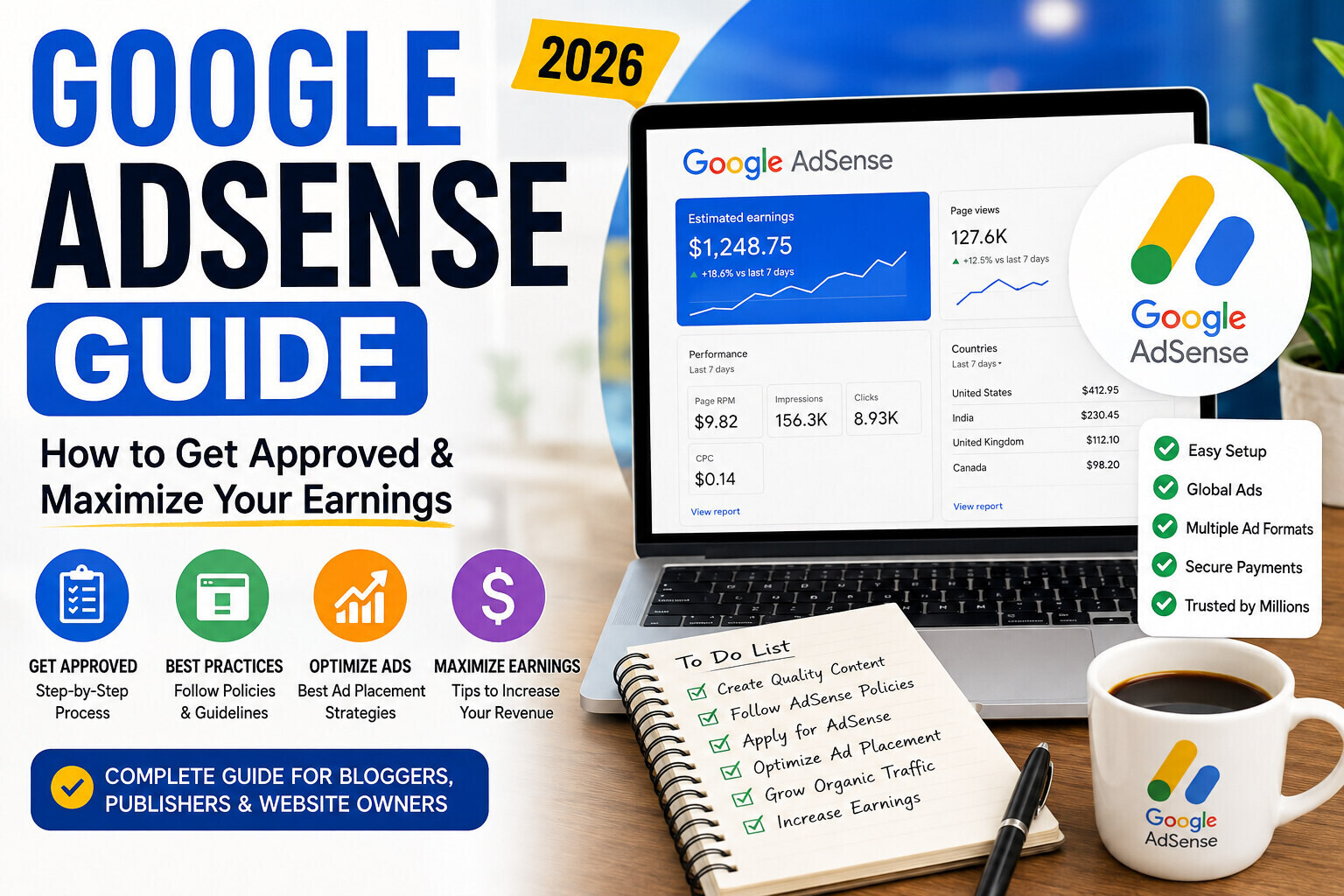
Google AdSense Guide
Monetizing a website is one of the most exciting milestones for bloggers, content creators, and online publishers. Among the many advertising platforms available, Google AdSense remains one of the most widely used because it is relatively easy to implement, supports websites of different sizes, and provides access to Google’s large advertising network.
Whether you’ve just launched your first blog or you’re looking to increase revenue from an existing website, understanding how AdSense works is essential.
This complete Google AdSense Guide explains the approval process, eligibility requirements, best practices, common mistakes, optimization strategies, and practical tips to help you build sustainable advertising revenue.
What Is Google AdSense?
Google AdSense is an advertising program that allows eligible website owners and publishers to earn revenue by displaying advertisements on their websites.
Advertisers bid to display relevant ads, and Google automatically serves advertisements that are related to your content and visitors.
Publishers earn revenue when eligible ad interactions occur, depending on factors such as advertiser demand, ad format, and user activity.
How Google AdSense Works
The basic workflow is straightforward.
Step 1
Create a website with original, high-quality content.
Step 2
Apply for the Google AdSense program.
Step 3
If your site is approved, Google provides advertising code that can be placed on your website.
Step 4
Google automatically displays advertisements that are relevant to your content and audience.
Step 5
As visitors interact with ads in legitimate ways, eligible revenue is recorded in your AdSense account according to Google’s policies.
Benefits of Google AdSense
Many website owners choose AdSense because of its ease of use and broad advertiser network.
Easy to Get Started
You don’t need to contact advertisers individually. Google manages the advertising marketplace and serves ads automatically.
Large Advertiser Network
Ads come from a wide range of businesses, increasing the likelihood of relevant advertisements being displayed.
Automatic Ad Optimization
Google’s systems automatically determine which ads are most appropriate based on your content, audience, and available inventory.
Multiple Ad Formats
Publishers can use various formats, including:
- Display ads
- In-feed ads
- In-article ads
- Multiplex ads
- Anchor ads (where supported)
The availability of formats may vary over time and by account.
Global Reach
Google AdSense supports publishers from many countries and can serve ads to audiences worldwide.
Who Can Use Google AdSense?
AdSense is suitable for many types of websites, including:
- Personal blogs
- Technology websites
- Educational websites
- News websites
- Business websites
- Tutorial websites
- Niche authority sites
- Recipe websites
- Travel blogs
- Finance blogs
The key requirement is that the website complies with Google’s program policies and contains sufficient original, valuable content.
Google AdSense Eligibility Requirements
Meeting the minimum requirements does not guarantee approval, but it improves your chances.
Original Content
Publish unique, useful, and well-written content.
Avoid:
- Copied articles
- Automatically generated low-quality content
- Thin pages with little value
- Duplicate content
Easy Website Navigation
Visitors should be able to find information quickly.
Include a clear:
- Main menu
- Categories
- Internal links
- Search feature (optional)
Essential Pages
Most professional websites include:
- About Us
- Contact
- Privacy Policy
- Terms and Conditions
- Disclaimer (if appropriate)
These pages help establish transparency and trust.
Mobile-Friendly Design
Your website should display properly on:
- Desktop
- Tablet
- Smartphone
Responsive themes generally provide a better user experience.
Fast Loading Speed
A fast website improves user experience and may contribute to better engagement.
Consider:
- Compressing images
- Using browser caching
- Minimizing unnecessary scripts
- Choosing reliable hosting
Secure Website
Using HTTPS helps protect visitors and is considered a standard best practice.
How to Apply for Google AdSense
The application process is relatively simple.
Step 1
Create or sign in to your Google account.
Step 2
Visit the Google AdSense website and submit your application.
Step 3
Add your website information.
Step 4
Verify ownership of your website by following Google’s instructions.
Step 5
Add the AdSense code to your website if requested during the review process.
Step 6
Wait while Google reviews your website.
The review period can vary depending on several factors.
Preparing Your Website Before Applying
Before submitting your application, consider checking the following.
Publish Quality Content
Aim for comprehensive, well-structured articles that provide genuine value to readers.
Rather than focusing on a specific number of posts, prioritize quality, originality, and topical coverage.
Improve User Experience
Review:
- Navigation
- Readability
- Mobile responsiveness
- Internal linking
- Broken links
A well-organized website is easier for both users and search engines to navigate.
Remove Placeholder Content
Delete:
- Empty pages
- Test posts
- Sample content
- Under-construction sections that provide little value
Check Grammar and Formatting
Professional presentation increases credibility.
Use:
- Proper headings
- Short paragraphs
- Bullet lists where appropriate
- High-quality images with descriptive alt text
Common Reasons for AdSense Rejection
Although Google evaluates websites holistically, these issues commonly contribute to unsuccessful applications.
Thin Content
Pages with very little useful information may not meet quality expectations.
Low-Quality Content
Content should be original, accurate, and written for users rather than search engines alone.
Incomplete Website
Missing important pages, broken navigation, or unfinished sections can negatively affect the overall quality of a website.
Policy Violations
Google may reject sites that contain content or practices that do not comply with its publisher policies.
Review the current policies carefully before applying.
Poor User Experience
Examples include:
- Difficult navigation
- Excessive pop-ups
- Slow loading pages
- Poor mobile usability
Insufficient Content Coverage
Instead of publishing many short articles, focus on creating comprehensive resources that demonstrate expertise within your niche.
Best Practices Before Applying
Use this checklist before submitting your application:
- Publish original, helpful content.
- Ensure all pages work correctly.
- Create essential legal and informational pages.
- Use a responsive website design.
- Improve loading speed.
- Check spelling and grammar.
- Fix broken links.
- Remove duplicate or low-value content.
- Organize categories and menus logically.
- Verify that your website uses HTTPS.
Preparing your site carefully can improve both user experience and the likelihood of meeting AdSense quality expectations.
How to Improve Your Chances of Google AdSense Approval
Although no one can guarantee AdSense approval, following Google’s quality guidelines and creating a valuable website can significantly improve your chances.
1. Publish High-Quality, Original Content
Google values content that is:
- Original
- Accurate
- Helpful
- Well-structured
- Written for real users
Instead of publishing dozens of short articles, focus on creating comprehensive guides that thoroughly answer users’ questions.
2. Build Topical Authority
Rather than covering random subjects, organize your content around a specific niche.
Example SEO Content Cluster:
- Keyword Research Guide
- Rank Math vs Yoast SEO
- Best AI Writing Tools
- Best AI Coding Assistants
- Best AI Image Generators
- Google Search Console Guide
- WordPress SEO Guide
A focused content strategy demonstrates expertise and improves the user experience.
3. Improve Website Navigation
Visitors should easily find information.
Best practices include:
- Clear menu structure
- Categories
- Breadcrumbs
- Internal links
- Search feature (optional)
4. Optimize for Mobile Devices
Most visitors browse using smartphones.
Make sure your website:
- Uses responsive layouts
- Loads quickly
- Has readable fonts
- Has buttons that are easy to tap
- Displays correctly on different screen sizes
5. Increase Website Speed
Fast websites generally provide a better user experience.
Ways to improve speed:
- Compress images
- Enable browser caching
- Minify CSS and JavaScript
- Use a Content Delivery Network (CDN)
- Choose reliable hosting
- Remove unnecessary plugins
Best Ad Placement Strategies
Good ad placement balances revenue with a positive user experience.
Above the Fold
Placing ads near the top of a page may improve visibility, but avoid overwhelming users with advertising.
Within Articles
In-article ads can perform well when integrated naturally between sections of long-form content.
Avoid interrupting the reading experience too frequently.
Sidebar
Sidebar ads may work well on desktop devices, especially for informational websites.
Their effectiveness can vary depending on your layout and audience.
After the Conclusion
Ads placed after an article can reach readers who finish the content and continue exploring the website.
Auto Ads
Google Auto Ads can automatically determine suitable placements across your website.
Many publishers use Auto Ads as a starting point and then refine placements based on performance and user experience.
Factors That Affect AdSense Earnings
There is no fixed income with AdSense. Earnings vary depending on several factors.
Website Traffic
More qualified visitors generally create more monetization opportunities.
Focus on attracting relevant organic traffic rather than simply increasing page views.
Content Niche
Advertiser demand differs across industries.
Examples of niches that often attract higher advertiser interest include:
- Finance
- Business
- Insurance
- Legal
- Technology
- Software
- Digital Marketing
Actual earnings vary based on many factors beyond niche alone.
Audience Location
Advertiser demand and bidding can differ by country and region.
Websites with audiences from multiple markets may see different revenue patterns across locations.
User Engagement
Visitors who spend more time on your website and explore multiple pages may contribute to stronger overall site performance.
Improve engagement by:
- Writing helpful content
- Adding internal links
- Improving page speed
- Using clear navigation
Ad Viewability
Ads should be visible without disrupting the reading experience.
A clean layout often benefits both users and advertisers.
Google AdSense Policies You Must Follow
Understanding Google’s publisher policies is essential for maintaining a healthy AdSense account.
Never Click Your Own Ads
Do not click advertisements on your own website or encourage others to do so.
Invalid activity can lead to account restrictions or suspension.
Avoid Invalid Traffic
Do not generate artificial traffic through bots, automated systems, or misleading practices.
Build traffic organically through quality content and legitimate marketing.
Publish Original Content
Copied, scraped, or duplicate content may negatively affect both SEO and AdSense eligibility.
Respect Copyright
Use only content, images, videos, and graphics that you have permission to use or that are appropriately licensed.
Maintain a Positive User Experience
Avoid:
- Excessive advertising
- Intrusive pop-ups
- Misleading navigation
- Hidden content
- Deceptive page layouts
Common AdSense Mistakes
Many beginners make avoidable mistakes.
Applying Too Early
A website with very little content or unfinished sections may not be ready for review.
Take time to build a complete, high-quality site.
Publishing Thin Articles
Aim for informative, well-organized articles that fully address the topic instead of publishing many short pages.
Ignoring Technical SEO
Check:
- HTTPS
- Mobile responsiveness
- Crawlability
- Page speed
- Broken links
Technical issues can affect both user experience and search visibility.
Too Many Ads
An excessive number of advertisements can reduce readability and discourage visitors.
Prioritize user experience over short-term revenue.
Neglecting Content Updates
Review older articles regularly.
Update:
- Statistics
- Screenshots
- Examples
- Internal links
- Outdated recommendations
Fresh, accurate content benefits both readers and search engines.
AdSense Optimization Tips
Once your site is approved, continuous optimization can improve long-term performance.
Publish Consistently
Regular publishing helps build topical authority and expand your organic search presence.
Improve SEO
Focus on:
- Keyword research
- Search intent
- Internal linking
- Helpful content
- Page experience
Higher-quality organic traffic often creates better monetization opportunities.
Experiment Carefully
Test different:
- Ad placements
- Content layouts
- Page designs
Make gradual changes and monitor their impact instead of changing everything at once.
Build Returning Visitors
Encourage repeat visits through:
- Email newsletters
- Related articles
- Useful resources
- Regular content updates
Returning readers often contribute to stronger engagement over time.
Monitor Performance
Review your analytics regularly to identify:
- Top-performing pages
- Traffic sources
- Engagement metrics
- Opportunities to improve existing content
Data-driven improvements generally produce better long-term results than guesswork.
Additional Monetization Tips
AdSense does not have to be your only revenue source.
Consider diversifying with:
- Affiliate marketing
- Digital products
- Online courses
- Sponsored content (clearly disclosed)
- Memberships
- Consulting or freelance services
Multiple revenue streams can make your website more resilient over time.
Google AdSense vs Other Ad Networks
While Google AdSense is one of the most popular website monetization platforms, it is not the only option. Choosing the right ad network depends on your traffic, audience, content niche, and monetization goals.
| Feature | Google AdSense | Other Premium Ad Networks |
|---|---|---|
| Beginner Friendly | ✅ Yes | Varies |
| Minimum Traffic Requirement | Usually Low | Often Higher |
| Easy Setup | ✅ Yes | Varies |
| Global Advertiser Network | ✅ Yes | Varies |
| Automatic Ad Optimization | ✅ Yes | Many Offer Similar Features |
| Multiple Ad Formats | ✅ Yes | Yes |
For many new publishers, AdSense is a practical starting point. As your website grows, you may evaluate other advertising platforms if they better match your business goals.
Frequently Asked Questions
What is Google AdSense?
Google AdSense is a program that allows eligible website owners to earn revenue by displaying advertisements on their websites.
Is Google AdSense free?
Yes. Joining Google AdSense does not require a registration fee.
How long does AdSense approval take?
The review period varies depending on the website and the review process. Some applications are reviewed quickly, while others may take longer.
How many articles do I need before applying?
Google does not publish a required number of articles. Instead of focusing on quantity, prioritize original, helpful, and well-organized content that demonstrates expertise and provides value to users.
Can a new website get approved?
Yes. New websites can be approved if they meet Google’s quality standards and publisher policies.
Why was my AdSense application rejected?
Common reasons include:
- Thin or low-value content
- Incomplete website
- Policy issues
- Poor user experience
- Insufficient original content
Review the feedback provided by Google, improve your website, and reapply when appropriate.
Does website traffic affect approval?
There is no official minimum traffic requirement for AdSense approval. However, building consistent, relevant traffic is beneficial for long-term monetization.
Can I use AdSense with WordPress?
Yes. AdSense works with self-hosted WordPress websites and can be integrated manually or with suitable ad management plugins.
Can I use multiple ad networks?
In many cases, yes, provided doing so complies with the policies of each network and does not create a poor user experience. Always review the current terms of the platforms you use.
How do I increase AdSense earnings?
Focus on:
- Publishing helpful content
- Improving SEO
- Increasing qualified traffic
- Enhancing user experience
- Optimizing ad placement responsibly
- Updating content regularly
Avoid any practices that violate Google’s policies.
Should I click my own ads?
No. Clicking your own ads or encouraging invalid clicks is prohibited and can lead to account restrictions or suspension.
Does page speed affect AdSense?
Fast-loading pages improve user experience and may contribute to better engagement, which can indirectly support monetization.
Which niches often attract higher advertiser demand?
Examples may include:
- Finance
- Technology
- Business
- Insurance
- Software
- Legal services
Actual earnings depend on many factors, including audience, geography, and advertiser competition.
Can AI-generated content be monetized with AdSense?
Google’s focus is on content quality, not simply how it was created. AI-assisted content may be eligible if it is original, accurate, helpful, demonstrates expertise, and complies with Google’s policies. Low-quality or spammy content—whether written by AI or humans—may not perform well or meet policy expectations.
Should I rely only on AdSense?
Many successful publishers diversify their revenue through methods such as affiliate marketing, digital products, online courses, consulting, memberships, or sponsorships, reducing dependence on a single income source.
Final Verdict
Google AdSense remains one of the most accessible and widely used monetization platforms for bloggers, publishers, and website owners. It offers a straightforward way to generate advertising revenue without negotiating directly with advertisers.
However, long-term success with AdSense depends on much more than placing ads on a website. High-quality original content, a positive user experience, strong SEO practices, and ongoing policy compliance are essential. Rather than chasing short-term gains, focus on building trust with your audience and publishing content that genuinely solves problems.
As your website grows, continue analyzing performance, improving your content, and diversifying your revenue streams. A sustainable publishing strategy is more valuable than relying on any single monetization method.
Internal Links
Strengthen your website’s topical authority by linking to related content such as:
- Keyword Research Guide
- Rank Math vs Yoast SEO
- Best Free WordPress Themes
- Best AI Writing Tools
- Best AI Coding Assistants
- Best AI Image Generators
- Best AI Video Generators
- ChatGPT Prompts for Business
- AI Resume Builder
- Start a Dropshipping Business
Conclusion
Google AdSense can be an effective monetization solution for websites that consistently publish valuable, original content and prioritize a strong user experience. Approval is only the beginning—the most successful publishers continue improving their websites through SEO, content updates, performance optimization, and policy compliance.
Instead of focusing solely on increasing ad revenue, invest in building an authoritative website that attracts loyal readers and sustainable organic traffic. Over time, combining quality content with responsible monetization practices can help create a stable and scalable online business.