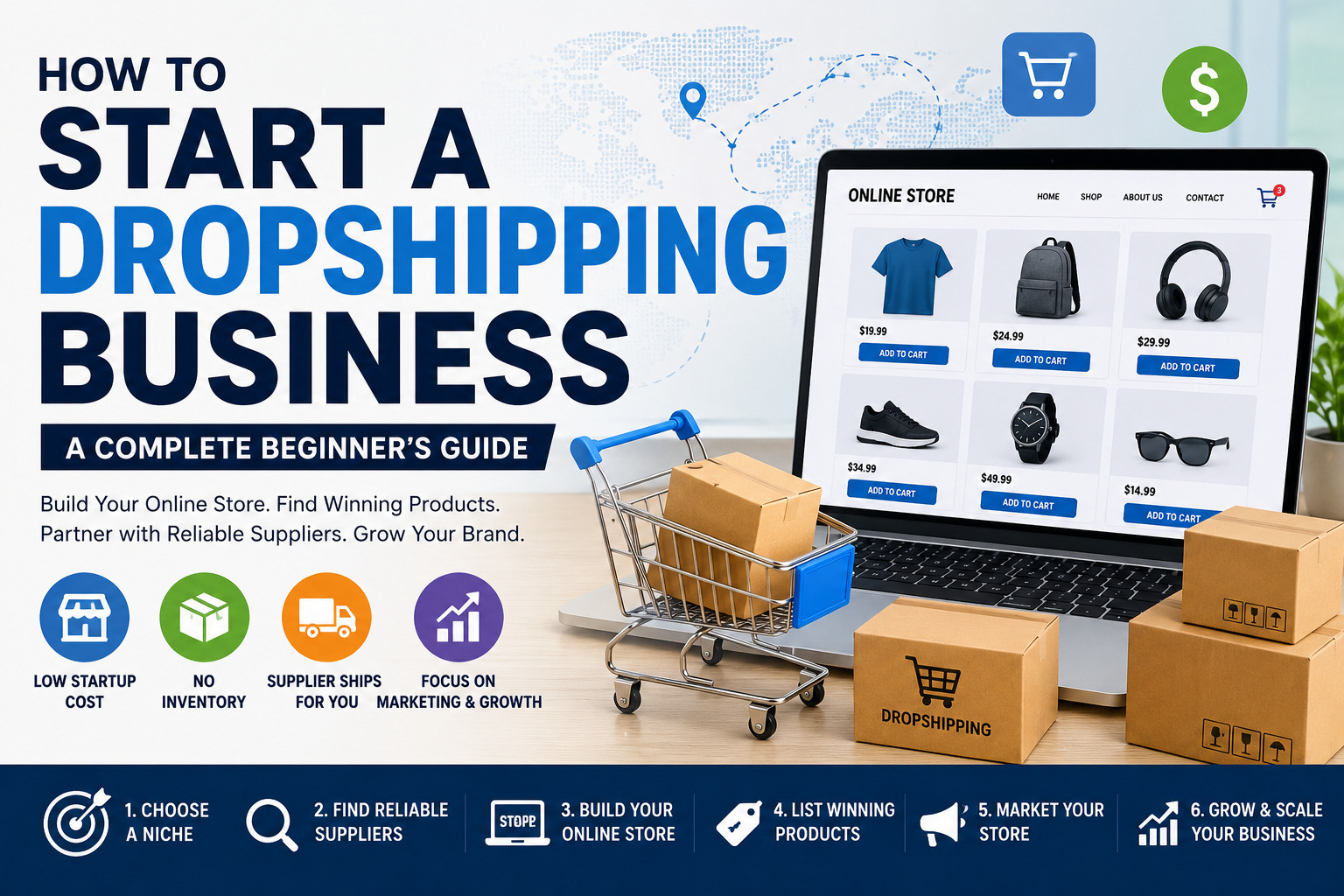
How to Start a Dropshipping Business
Starting a dropshipping business is one of the most accessible ways to enter the world of eCommerce. Unlike traditional retail, dropshipping allows you to sell products online without purchasing inventory in advance or managing a warehouse. When a customer places an order, the supplier ships the product directly to the customer, allowing you to focus on marketing, customer service, and business growth.
This low-overhead business model has attracted entrepreneurs, freelancers, students, and small business owners worldwide. However, success in dropshipping is not guaranteed. Building a profitable store requires careful planning, selecting the right niche, working with reliable suppliers, and implementing effective marketing strategies.
This comprehensive guide explains everything you need to know to start a successful dropshipping business in 2026.
What Is Dropshipping?
Dropshipping is an eCommerce fulfillment model in which the seller does not keep products in stock. Instead, when a customer places an order, the seller forwards the order details to a third-party supplier. The supplier then packages and ships the product directly to the customer.
Because inventory is managed by the supplier, business owners can focus on attracting customers and improving the shopping experience rather than handling storage and shipping.
How Does Dropshipping Work?
The dropshipping process typically follows these steps:
- A customer visits your online store and places an order.
- You receive the payment from the customer.
- You forward the order to your supplier.
- The supplier prepares and ships the product.
- The customer receives the order.
- You earn the difference between the selling price and the supplier’s cost.
This model reduces the need for upfront inventory investment, but your success depends on choosing quality suppliers and maintaining a strong customer experience.
Advantages of Starting a Dropshipping Business
Dropshipping offers several benefits for new entrepreneurs.
Low Startup Costs
Since you don’t need to purchase inventory before making sales, the initial investment is significantly lower than traditional retail.
No Inventory Management
Suppliers handle warehousing, inventory tracking, and shipping logistics.
Flexible Location
Because your business operates online, you can manage it from almost anywhere with a reliable internet connection.
Wide Product Selection
You can list many products without purchasing them first, making it easier to test different markets.
Easy to Scale
As order volume grows, suppliers typically handle increased fulfillment, allowing you to focus on marketing and operations.
Challenges of Dropshipping
Although dropshipping offers many advantages, it’s important to understand the challenges before starting.
High Competition
Popular niches often attract many sellers, making it essential to differentiate your store through branding, customer service, and product selection.
Lower Profit Margins
Competition can lead to price pressure. Successful businesses often focus on value, branding, and repeat customers rather than competing only on price.
Shipping Delays
Your reputation depends partly on supplier performance. Delayed deliveries can affect customer satisfaction.
Limited Inventory Control
Because suppliers manage inventory, products may become unavailable without notice. Regular communication with suppliers helps reduce this risk.
Is Dropshipping Still Profitable in 2026?
Yes, dropshipping can still be profitable in 2026, but success depends on strategy rather than simply launching a store.
Businesses that succeed generally focus on:
- Selecting a well-researched niche
- Working with dependable suppliers
- Building a trustworthy brand
- Creating high-quality product pages
- Providing responsive customer support
- Investing in sustainable marketing strategies
Rather than trying to sell everything, many successful stores specialize in a specific category and develop expertise within that market.
Step 1: Choose a Profitable Niche
Your niche is one of the most important decisions you’ll make.
A profitable niche should combine customer demand with manageable competition and products that offer reasonable profit margins.
Examples include:
- Home organization
- Fitness accessories
- Pet supplies
- Office equipment
- Kitchen gadgets
- Eco-friendly products
- Outdoor gear
- Baby products
- Automotive accessories
- Beauty tools
When evaluating a niche, consider:
- Market demand
- Competition
- Average selling price
- Profit margin
- Product quality
- Shipping practicality
- Customer interest throughout the year
Avoid selecting a niche solely because it is trending. Long-term demand often provides a more stable foundation for business growth.
Step 2: Research Your Target Audience
Understanding your customers helps you make better decisions about products, pricing, marketing, and customer service.
Ask questions such as:
- Who are your ideal customers?
- What problems are they trying to solve?
- What features do they value most?
- How much are they willing to spend?
- Which social media platforms do they use?
- What influences their buying decisions?
Creating a simple customer profile can help guide your branding and marketing efforts.
Step 3: Analyze Your Competitors
Studying competitors provides valuable insights into the market.
Look at:
- Product selection
- Pricing strategies
- Website design
- Product descriptions
- Customer reviews
- Shipping policies
- Return policies
- Marketing channels
The goal is not to copy competitors but to identify opportunities to offer a better shopping experience or serve an underserved audience.
Step 4: Create a Business Plan
Even a small online business benefits from a written plan.
Your business plan should include:
- Business goals
- Target audience
- Product categories
- Marketing strategy
- Estimated expenses
- Revenue targets
- Customer acquisition plan
- Growth objectives
A clear plan helps you stay focused and measure progress as your business develops.
Step 5: Choose a Business Name and Domain
Select a business name that is:
- Easy to remember
- Simple to spell
- Relevant to your niche
- Unique and brandable
Whenever possible, register a matching .com domain name to strengthen your online brand.
Before purchasing a domain, check that the name is available on major social media platforms to maintain consistent branding across channels.
What’s Next?
With your niche selected, business plan prepared, and brand name chosen, the next step is building your online store and connecting it with reliable suppliers.
In the next section, you’ll learn how to choose the best eCommerce platform, evaluate suppliers, import products, set competitive pricing, and create product pages that convert visitors into customers.
Step 6: Choose the Right eCommerce Platform
Your eCommerce platform is the foundation of your dropshipping business. It should be easy to manage, secure, mobile-friendly, and capable of growing with your business.
Popular Platforms
Shopify
Shopify is one of the most popular platforms for dropshipping because it is beginner-friendly and offers a large ecosystem of apps.
Pros
- Easy to set up
- Secure hosting included
- Excellent app marketplace
- Mobile responsive themes
- Reliable performance
Cons
- Monthly subscription fee
- Some apps require additional payment
WooCommerce
WooCommerce is a WordPress plugin that turns your website into a fully functional online store.
Pros
- Free to install
- Highly customizable
- Excellent SEO capabilities
- Thousands of themes and plugins
- Full ownership of your website
Cons
- Requires web hosting
- Slightly steeper learning curve for beginners
BigCommerce
BigCommerce is suitable for businesses planning to scale quickly.
Pros
- Strong built-in features
- Good performance
- Multi-channel selling
- Enterprise-ready
Wix eCommerce
Wix offers a simple drag-and-drop website builder with eCommerce functionality.
It is ideal for beginners who want an easy setup without technical knowledge.
Step 7: Find Reliable Suppliers
Your supplier directly affects customer satisfaction. Product quality, shipping speed, and communication all influence your store’s reputation.
When evaluating suppliers, consider:
- Product quality
- Shipping times
- Customer reviews
- Return policies
- Communication
- Order accuracy
- Inventory consistency
Reliable suppliers help reduce customer complaints and increase repeat purchases.
Step 8: Choose Winning Products
Not every product will generate consistent sales. Focus on products that solve real problems or provide clear value to customers.
Good products often have these characteristics:
- Consistent demand
- Healthy profit margins
- Lightweight for shipping
- Low return rates
- Positive customer reviews
- Attractive product images
Avoid overcrowded markets where competing only on price becomes difficult.
Step 9: Build Your Online Store
Your website is your digital storefront.
A professional-looking store builds trust and encourages visitors to complete purchases.
Essential pages include:
- Home
- Shop
- Product Categories
- About Us
- Contact
- Frequently Asked Questions
- Shipping Policy
- Return Policy
- Privacy Policy
- Terms and Conditions
Create High-Converting Product Pages
Every product page should include:
Clear Product Title
Use descriptive titles that explain exactly what the product is.
Professional Images
Use high-quality images showing the product from multiple angles.
Whenever possible, include lifestyle photos demonstrating real-world use.
Unique Product Descriptions
Avoid copying supplier descriptions.
Instead, explain:
- Features
- Benefits
- Specifications
- Use cases
- Care instructions (if applicable)
Unique descriptions can improve both user experience and search engine visibility.
Pricing Strategy
Consider:
- Product cost
- Shipping expenses
- Advertising costs
- Payment processing fees
- Desired profit margin
Competitive pricing should balance profitability with customer expectations.
Step 10: Configure Payment Gateways
Choose secure payment methods that your customers trust.
Popular options include:
- Credit cards
- Debit cards
- Digital wallets
- Bank transfers (where appropriate)
Display accepted payment methods clearly during checkout to increase customer confidence.
Step 11: Set Shipping Policies
Transparent shipping policies reduce customer confusion.
Your shipping page should explain:
- Estimated delivery times
- Shipping costs
- International shipping availability
- Order processing time
- Tracking information
- Lost package procedures
Clear communication helps manage customer expectations.
Step 12: Create Essential Legal Pages
Every professional online store should include:
- Privacy Policy
- Terms of Service
- Refund Policy
- Shipping Policy
- Cookie Policy (if required)
These pages improve transparency and help customers understand your business practices.
Step 13: Optimize Your Store for SEO
Search engine optimization can generate consistent, long-term traffic without relying entirely on paid advertising.
Focus on:
Keyword Research
Identify keywords your potential customers are searching for.
Include relevant keywords naturally in:
- Product titles
- Category pages
- Blog posts
- Meta titles
- Meta descriptions
- URLs
Optimize Images
Use descriptive file names.
Example:
wireless-bluetooth-headphones.jpg
Add meaningful alt text describing each image.
Improve Website Speed
A fast website provides a better user experience and can support search performance.
Ways to improve speed include:
- Compress images
- Use browser caching
- Choose reliable hosting
- Minimize unnecessary plugins
Mobile Optimization
Ensure your store works well on smartphones and tablets.
Responsive design is essential because a significant portion of online shopping now takes place on mobile devices.
Step 14: Develop a Marketing Strategy
Even the best products need effective marketing.
Successful dropshipping businesses often combine several traffic sources.
Content Marketing
Publish helpful articles related to your niche.
Examples include:
- Buying guides
- Product comparisons
- Tutorials
- Industry trends
Search Engine Optimization
SEO can provide sustainable organic traffic over time.
Invest in creating valuable, original content that answers customer questions.
Email Marketing
Build an email list to:
- Announce new products
- Share promotions
- Recover abandoned carts
- Encourage repeat purchases
Social Media Marketing
Use platforms where your target audience is active.
Share:
- Product demonstrations
- Customer testimonials
- Educational content
- Behind-the-scenes updates
Paid Advertising
Advertising can help generate traffic quickly, but campaigns should be monitored carefully to ensure they remain profitable.
Track metrics such as:
- Click-through rate (CTR)
- Conversion rate
- Cost per acquisition (CPA)
- Return on ad spend (ROAS)
Step 15: Deliver Excellent Customer Service
Strong customer service can set your store apart from competitors.
Best practices include:
- Respond promptly to inquiries.
- Be transparent about shipping times.
- Resolve issues professionally.
- Make return procedures clear.
- Request customer feedback after purchases.
Satisfied customers are more likely to leave positive reviews and recommend your store to others.
Monitor and Improve Your Business
Successful dropshipping stores continually measure performance.
Track important metrics such as:
- Website traffic
- Conversion rate
- Average order value
- Customer acquisition cost
- Repeat purchase rate
- Return rate
- Profit margin
Regular analysis helps identify opportunities for growth and areas that need improvement.
Common Dropshipping Mistakes to Avoid
Many new entrepreneurs believe that launching a dropshipping store is enough to generate sales automatically. In reality, long-term success requires planning, continuous optimization, and excellent customer service.
Here are some of the most common mistakes to avoid.
Choosing the Wrong Niche
Selecting a niche solely because it is trending can lead to intense competition and inconsistent sales. Instead, choose a niche with steady demand, reasonable profit margins, and products that solve real customer problems.
Working with Unreliable Suppliers
Your supplier represents your business to the customer. Poor product quality, delayed shipping, or inaccurate inventory can damage your reputation.
Before partnering with a supplier:
- Read customer reviews.
- Order product samples.
- Test communication speed.
- Verify shipping options.
- Understand return and refund policies.
Copying Product Descriptions
Using the supplier’s default product descriptions creates duplicate content, which provides little value to customers and may reduce your store’s ability to stand out in search results.
Write unique descriptions that focus on:
- Product benefits
- Features
- Real-world use cases
- Frequently asked questions
- Care instructions (when applicable)
Ignoring SEO
Many store owners rely entirely on paid advertising.
While ads can generate immediate traffic, investing in search engine optimization helps build long-term organic visibility.
Create useful blog content, optimize product pages, improve page speed, and use descriptive meta titles and image alt text.
Poor Customer Support
Fast and professional customer service builds trust.
Respond to inquiries quickly, communicate clearly, and handle complaints professionally.
Satisfied customers are more likely to leave positive reviews and become repeat buyers.
Best Marketing Strategies for Dropshipping
Marketing is essential for attracting customers and increasing sales.
Search Engine Optimization (SEO)
SEO helps your website rank for relevant search queries.
Focus on:
- Keyword research
- Product page optimization
- Blog articles
- Internal linking
- Image optimization
- Technical SEO
Organic traffic often provides sustainable long-term growth.
Content Marketing
Publishing valuable content establishes authority and helps customers make informed purchasing decisions.
Examples include:
- Product comparisons
- Buying guides
- Tutorials
- Industry news
- Frequently asked questions
Helpful content also supports your SEO strategy.
Email Marketing
Email remains one of the highest-return digital marketing channels.
Use it to:
- Welcome new subscribers
- Promote special offers
- Recover abandoned carts
- Announce new arrivals
- Encourage repeat purchases
Always provide valuable content instead of sending only promotional emails.
Social Media Marketing
Choose platforms where your target audience is most active.
Share:
- Product demonstrations
- Customer testimonials
- Educational posts
- Short videos
- Behind-the-scenes content
Consistency is more effective than posting occasionally.
Influencer Partnerships
Working with trusted creators in your niche can increase brand awareness and reach new audiences.
Choose partners whose audience aligns with your target customers.
Tools That Can Help Your Dropshipping Business
Running a successful store becomes easier with the right tools.
Consider solutions for:
- Website analytics
- Search engine optimization
- Email marketing
- Customer support
- Live chat
- Inventory synchronization
- Image optimization
- Graphic design
- Social media scheduling
Select tools that solve specific business needs rather than installing unnecessary software.
Is Dropshipping the Right Business Model for You?
Dropshipping may be a good choice if you:
- Want to start an online business with relatively low upfront costs.
- Prefer focusing on marketing and customer experience instead of inventory management.
- Are willing to learn digital marketing and eCommerce.
- Understand that building a profitable business takes time and consistent effort.
It may not be the best fit if you expect immediate profits without investing in learning, testing, and continuous improvement.
Frequently Asked Questions
How much money do I need to start a dropshipping business?
Startup costs vary depending on your platform, hosting, domain name, marketing budget, and optional tools. Many entrepreneurs begin with a modest budget and scale gradually as sales increase.
Is dropshipping legal?
Yes. Dropshipping is a legitimate business model in many countries, provided you comply with applicable laws, tax regulations, consumer protection requirements, and platform policies.
Can I start dropshipping without holding inventory?
Yes. In the dropshipping model, suppliers store and ship products directly to customers after an order is placed.
Which platform is best for beginners?
Many beginners choose Shopify for its ease of use, while WooCommerce is a strong option for users who want greater flexibility and control over their website.
How long does it take to become profitable?
Profitability depends on factors such as niche selection, product quality, marketing strategy, competition, and customer retention. Some stores grow quickly, while others require months of testing and optimization.
Can I run a dropshipping business from home?
Yes. Because inventory is managed by suppliers, most dropshipping businesses can be operated remotely with a computer and internet connection.
Do I need a business license?
Requirements vary by country and region. Check local laws regarding business registration, taxation, and consumer protection before launching your store.
What products should I avoid?
Avoid products with:
- Extremely low profit margins
- Frequent quality issues
- High return rates
- Legal or regulatory restrictions
- Oversaturated competition without a clear competitive advantage
Final Tips for Long-Term Success
Successful dropshipping businesses share several common habits:
- Focus on a specific niche.
- Build a recognizable brand.
- Work with dependable suppliers.
- Create original product descriptions.
- Invest in SEO and content marketing.
- Monitor performance regularly.
- Improve your store based on customer feedback.
- Stay informed about eCommerce trends.
Rather than chasing short-term trends, prioritize customer satisfaction and sustainable growth.
Conclusion
Dropshipping remains one of the most accessible ways to start an online business in 2026. Its low startup costs and flexible operating model make it attractive to entrepreneurs, freelancers, students, and small business owners.
However, success is not automatic. A profitable dropshipping business requires careful niche selection, reliable suppliers, a professional online store, effective marketing, and excellent customer service.
By following the steps outlined in this guide, you can build a strong foundation for your business and continue improving it over time. Focus on delivering value to your customers, monitor your performance, and adapt to changing market conditions. With patience, consistent effort, and a commitment to quality, your dropshipping business can grow into a sustainable source of online income.
Suggested Internal Links
- Best Free WordPress Themes
- Rank Math vs Yoast SEO
- How to Start a Blog
- Beginner’s Guide to SEO
- Best AI Tools for Entrepreneurs
- WooCommerce vs Shopify
- Email Marketing for Beginne
- Social Media Marketing Guide
Call to Action
Are you planning to start a dropshipping business this year? Share your biggest challenge or question in the comments below. We’d love to hear about your goals and help you take the next step toward building a successful online business.
- Upwork Readiness Test : Complete Guide, Questions, Tips & Preparation
- Popular Freelancing Skills for Beginners : In-Demand Skills to Start Freelance Career
- Google AdSense Guide : How to Get Approved and Maximize Your Earnings
- Keyword Research : The Complete Beginner’s Guide to Finding High-Ranking Keywords
- এনভায়রনমেন্টাল টেকনোলজি